Sunday, September 30, 2007

The search for strategies and tools to stimulate economic and social revival in South Africa

That's the best way I can describe where I'm going with this.

With all the talk of why we do things and where we're going, I realised that I haven't made that very clear here. So to give a little more direction at home, so to speak, I've adopted this as the OutThink tagline. Hence the new line under the logo above [inspired by the humble tag cloud].

Each word is significant:

  • SEARCH - its a journey, not a destination, and there isn't one right answer [never will be]
  • STRATEGIES - the big picture is what really matters [sometimes it is easily lost sight of]
  • TOOLS - we still need to action them, it can't happen on its own
  • STIMULATE - stir, generate, revitalise, make-happen
  • ECONOMIC - finances are not the most important thing in life, but do facilitate many things
  • SOCIAL - nothing matters more than people
  • REVIVAL - a new thing, complete change required, for such a time as this
  • SOUTH AFRICA - there's no place like home [we were put here for a reason]

This is something that's worth getting worked up about! I sure am.

Perhaps this will put my crazy questioning and psychotic ranting into a bit of perspective. I really hope you will enjoy reading [most] of it, and would love to hear from anyone with any comments or thoughts on this.

Saturday, September 29, 2007

30 of the coolest entrepreneurs under 30

If you're looking for a bit of inspiration as you struggle to take the plunge into entrepreneurial immortality, check out this slideshow from Inc.com about 30 of America's young, fast-rising stars and read a bit about their businesses.

Friday, September 28, 2007

Is a blog just a bad business in disguise?

After two related posts relating to blogs for sale, I got to thinking about the real value of blogging. WHY DO WE DO THIS?

Eve Dmochowska's question here relating to a blog for sale had me thinking the answer was obvious, but then to see Adii seriously considering purchasing one here made me rethink it for a second.

Just to take a little step back... I see a distinguishing factor between a great business and a great businessman. You can be a great businessman/salesman/widget-maker-extraordinaire but still not have a great business. One of the marks of a great business is that the system runs regardless of whether the owner/manager is there [ie the business doesn't go home at night when you do]. I've written previously about the great education model that's been built at CIDA - but in reading this article in the Economist ["CIDA remains intimately associated with its founder and chief executive, and there are questions about whether it would survive without him."], it seems that this is even an issue in their hallowed halls.

Building a business away from yourself is largely contradictory to how most blogs are developed - where the personalities involved often become the main attraction, and advertising revenues [see the two examples Adii cites] are the business model. I'm sure we've all seen many blogs simply dripping with tons of paid links awaiting your beloved clicks. Shouldn't a blog be more than this?

That's one of the reasons I don't have any Adsense or other paid-links here. I love writing and want to enjoy it for what it is. Do I want a blog that is widely read and respected? Sure - we all do. What I would also love to do is build an AWESOME, amazing business one day that will change the world!!! But will a blog ever be that? Sure, it can be a part of it, but I don't believe the blog should ever be the business itself.

Please don't take this the wrong way. I know sites that attract lots of eyeballs are valuable. I know there's huge potential and the possibilities are amazing - but there's still quite a lot of work to be done in this particular case. Buying it is a shortcut which many might be able to use well, so if someone is willing to pay over $8,000 for a blog, without any other clear business model built around it [precious few contracts, current relatively low revenue levels, etc], I wish them all the best, and can only say congrats to the high-school going developer. Hey - that's the entrepreneurial spirit!

Tuesday, September 25, 2007

Go ahead, make your product as expensive as you want to

Price vs value - the battle rages within each one of us... I'm fascinated by it for a number of reasons [I previously worked in a corporate finance department, being involved in valuation work amongst other interesting stuff; and one of my top projects at the moment is finding a way to cement shareholder value in a creative environment where share price is a big deal]

We all inherently understand this concept of price vs value, but few people seem to consciously grip the fundamental basics of this.

Price is an objective amount assigned to something which represents what the seller believes that something is worth to the buyer.

Value is the buyer's subjective view of what something is worth [with worth being measured in many ways, both tangible and intangible].

Take a simple example - would you rather pay R150 or R1,500 for a pair of sunglasses? Take a pair of Bondi Blu sunglasses costing R150 and Ray-Ban's costing R1,500. Gerrit sees the value of a pair of sunglasses as 'UV protection + comfort = about R120' and he reluctantly pays R150 for the Bondi's. Adele sees the value as 'UV protection + comfort + I look awesome = R2,000' and she gladly pays the R1,500 for the big guns.

Even my own vehicular predisposition - R2.5 million for a Lamborghini = "Where do I pay??", whereas R2.5 million for a Ferrari only adds up to "No thanks, just looking". Even though the cars could be very similar in terms of shape, size, performance, colour, whatever - it all boils down to perception and what my take on value is.

But I digress - back to business and Vinny Lingham touched on this in his recent article on the value of facebook where it's very nicely summarised: "At the end of the day, valuations are really about willing buyer, willing seller, and perceived value to the buyer".

What great businesses do is manage to appeal to what their customers really value - and that is certainly not always easy.

BMW [back to cars, but just for this outstanding example which really highlights the case] has somehow managed to bridge the price / value gap with its amazing 3 series range - Wikipedia states "The 3 Series is the best selling luxury sedan in the United States — 98,000 vehicles were sold in 2005". Sure, our local figures are a lot lower, and you may say what about the Merc C-class, which outsold the 3 by about 3x in August 2007 - but you're missing the point.

My point is this - how many BMW 3's do you see on the road? I know many people who won't buy them simply because they don't want to have the same car that "everyone else" is driving. BMW have successfully taken a luxury car and sold it to the masses. Ten years ago, many people aspired to have a BMW. Now, many people do have one [and even with car prices at the levels they are now]. They managed a 'Henry Ford'-scale revolution with a luxury, high-price [and assumedly high value] item. UNREAL!

The Wiki author's comments are spot-on: "From its sporting origins, the 3 Series success has led BMW to become one of the most recognized brands in the world, in league with Coca-Cola, IBM, The Four Seasons, and American Express. Being an accessible prestige-badge car, the 3 Series' reputation grew from its humble beginnings, winning numerous awards and honors throughout the automotive world. By the early 21st century, the E46 3 Series was the best-selling car of its segment (premium middle class cars),as commonplace in Asia and America as in Europe, while maintaining its prestigious brand and image."


Surely all businesses can take a page out of their book - IT DOESN'T MATTER WHAT YOUR PRODUCT OR SERVICE COSTS - IF YOU DELIVER VALUE TO CUSTOMERS, THEY WILL BUY IT!
Thursday, September 20, 2007

HAIR RAISING venture capital statistics!

I just can't get this out of my mind. I saw it a few days ago, and when I close my eyes, it sits there haunting me!

1 in 10,000

In this MBA.co.za article, this is said to be the number of new ventures have venture capital in hand when starting out [and thats in the US - I shudder to think what SA's stats look like].

1 in 10,000.

1 in 10,000?

1 in 10,000!

Heaven help our fired up, driven, WOW entrepreneurs! We've got to find a way to change this!

More on this soon. Its too scary to be left alone.

Wednesday, September 19, 2007

Are technological advances good for us?

I'm sure anyone hearing that would say "What a moronic question! Of course they are.", but there's a little bit more to it than meets the eye.

I'm sure you've been to a shopping mall, most of which have paid parking with those fancy little machines that only take certain coins and notes [and usually not the ones I happen to have on hand]. One thing I saw the other day, which I haven't seen in a while, is a place with paid parking that still has the little booth with someone sitting inside taking your payment as you leave.

The technology [being the electronic ticketing machine] has almost entirely replaced manual parking attendants, in the space of a few years. But is this a good thing?

Yes, the electronic system has its benefits, but I would have to say these are mostly for the business concerned and not for its customers. Lets look at the facts:

What does the company [I'm referring to the venue, eg a shopping mall] gain?
- More reliability? Yes - machines don't take sick days or days off
- Less labour issues? Yes - no pay disputes, etc
- Information? Yes - reporting on ticket sales, capacity, etc [surely]
- Admin relief? Yes - generally outsourced

So its obvious to say better technology is great for the business!

What does the customer gain?
- Security? No - safer to have people at the booms
- Enjoyment? No - queues to pay can be long, and no smiling face at the booth
- Cheaper? No - not that I've ever seen. Have you?
- Less hassles? No - a person can sort problems out on the spot, a machine can't

We all know - customers are key to the business! So exactly what do customers get from this wonderful technological advance?

And in this lies the hidden value destruction - whereas I might not mind going to a mall and paying for parking when things run smoothly [ie someone in a booth; manual process], I can get incredibly upset when dealing with machines and tickets that don't work. The people add something... something intangible, that the machine can never replace, and in the end, that affects my [as the customer] view of that shopping mall/business/whatever.

And what about for our economy?

Three words - forty percent unemployment.

I accept this is not the only answer. Technology also creates jobs, creates opportunities for growth, changes lives. All I'm saying is, we need to think it through carefully before just pushing ahead.

Monday, September 17, 2007

Forget % growth, exponential growth is in

Many companies' realities [and budgets] reflect % growth. And sure, there's practicality in this. After all, growth off a high base can be more difficult than growth off a small base [20% growth on R100 million is much more to achieve than 20% growth on R1 million].

But why think in %'s. Yes, 20% growth on R100 million is probably very difficult. It probably requires thinking about a number of challenging initiatives, streamlining the business, adding a few new products... blah, blah, blah.

Thinking about exponential growth will change your reality! Not 30% more profit - how about tripling profit? A few new products probably won't help, nor will cutting some costs, or relocating. This requires a major mindshift.

The QTCE here: What can our company do to triple our profits in the next year?

The answers will not be easy. The question might even be too much for any manager or director to ask [fear, perhaps?]. But in exploring the possibilities, you may just stumble on something far bigger than you could ever achieve chasing after mere % growth.

So what if you fail trying... so what if you only grow profits by 47.6% instead of by 3x? Imagine the lessons learned.


Follow this thread here -> The question that changes everything

Friday, September 14, 2007

SAP teeing up a rollercoaster IPO ride

Talk about putting it all on the line. You've probably seen the adverts around - SAP has taken a bit of a flying leap by sponsoring the Go4Growth competition, with the prize up for grabs - a listing on the JSE!

They say they're looking for "SA's most committed to growth company". Sounds awesome, but it will be interesting to see how they judge that one.

In the end, its marketing. And taking such a different approach, doing what hasn't been done before, I can only applaud their effort [and their ever-increasing focus on SME's].

On the one hand, they might be letting themselves in for far more than they anticipate - each company that they select will undergo a due diligence. Even a limited due diligence [done properly] would consume a couple of professional staff for at least a week. And then, there is always risk in a DD, so they have to get it right to take the company further in the competition. I can't imagine that getting through all the entrants [according to ManufacturingHub there are more than 100] will be a cheap exercise for the competition sponsors.

On the other hand - how exciting! What if it does work? What if they unearth a diamond in the rough? What if this is the start of an unbelievable ride for an unassuming company that will change its future immeasurably?


What I do find a bit strange is the bigger picture. Surely any company which is geared and ready for listing should already be investigating or in the process [and would certainly not want to risk wasting time on trying to find out whether they win a competition or not - the pending inflow of funds should already be earmarked for some type of investment]. This leaves those available to enter as being companies which are probably sitting on the fence - "Maybe we want to list, maybe we don't". There is a possibility this could pan out well and exceed everyone's expectations, but looking at the facts, it seems a bit high risk to me - for both the sponsors and the winner.

Only time will tell. Best of luck to SAP and the contestants [not to mention the JSE, AltX and Exhange Sponsors, who may well have their patience tested a little more than usual]. Personally, I hope that it does work... it could just breathe a bit of new life into aspiring unlisted companies.


As an aside, its interesting that the competition is open only to private companies [(Pty) Ltd's] and cc's. Since those entities would have to be converted to public companies anyway, I can't understand why they don't allow public [Ltd] companies to enter. Surely this wasn't the intention in laying down the ground rules.

Oh, and perhaps, with all the hype about reality TV shows, they'll also be filming the process, and we'll capture the highly stressful listing process on camera? Personally, I'd prefer that to some of the other rot they're putting on the box nowadays. We could even get guest appearances and insight from some of SA's top business moguls. What do you think?

Thursday, September 13, 2007

The question that changes everything

How often have you said something or been asked something, and all of a sudden.. a light goes on?

They say that words can change lives. We all know the power of the tongue... one of mankind's greatest assets [and weapons].

As I've been going on about in this blog for a while now, I believe change is an absolute, unequivocal necessity for our country to flourish to its true potential. And with that... I'm interested to see whether the power of words can truly challenge and change realities.

Open your mind. Consider - the question that changes everything...

...one question, asked with sincerity, that digs to the heart of an issue and challenges the reality that we accept on a daily basis - and then turns it upside down!!

On that note, can we unlock the right questions for us to move forward and innovate? Any contributions are welcome, and I'll be looking at the best forum to make this more accessible and collaborative in the near future, but for now it starts here.

So I'll get the ball rolling with one of the better questions I've heard recently, one which many companies should be asking themselves [particularly as SA plays catch up in the global technology game]:

What would you do to survive if your competitors' products were free?

Yes, there are certainly follow up questions to this, and no - I don't expect you to answer the question here. Just think about it.

Please. Business leaders. Young entrepreneurs. Experienced innovators. Just think about it.

Tuesday, September 11, 2007

Are directors just pawns in the game of business?


I like marcashton's analogy between a sales team and chess moves. I found the concept interesting, and I yhought I'd try something a little different - to metaphorically disect a company's building blocks in chess'ese:

Pawns
To me, the pawns represent management [not employees, as most would probably say]. The pawns stand in the front line, lead the way forward and have to make moves and sacrifices in the team's best interests.

Rook [aka Castle]
These more closely resemble employees. Their movement is far more limited as they play a role but not the lead role. They are there to get the job done [often in chess these get the job done in going for check-mate].

Knight
Their flexible movement is reminiscent of a company's products and services. They need to be constantly moving and changing to stay ahead of the competition. And with the unusual 'L' movement, its easy to be caught off guard, or to catch your competition off guard.

Bishop
Difficult one, but by a process of elimination, can be seen to be the suppliers. They are there to add to the business [by providing products and services]. The more predictable and consistent their movement, the easier they are to handle.

Queen
This is probably the brand [not a living member of the cast, but still an integral player]. This gives life to the company and plays an integral part in the strategy of many companies. When the queen is lost, strategy often changes direction significantly.

King
It is the most important piece to be protected, and probably best approximates the customer. Without customers, no business will survive.

The board
Not 'the Board'. This is the company itself and forms the playing field where all interactions take place. In the end, it is just an inanimate structure, but you can't play the game without it.

The player
I would take this to represent the directors - needing a good 'big picture' view of the board and everything going on. The player has the ability to direct the game in its entirety and to make decisions affecting all its participants.

The chess set's owners
Last and certainly not least - representing the shareholders. It doesn't matter how the player plays the game, in the end he better look after the chess set and return it to its rightful owners. In many cases, the players and the owners are one and the same... but isn't that the way it is in business too?


One specific note to the two above - the directors are the stewards of the business, and unlike returning a chess set to its owners slightly worse for wear, a business should eventually be 'returned' to its owners in better condition than when control was originally given to the directors - the hallmark of an excellent director/board.

Okay, so this isn't an exact science, but I hope you see what I'm getting at. Any differing viewpoints would be interesting to hear.

The Raging Bulls are at it again

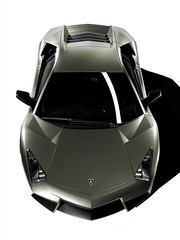
I am absolutely thrilled. Taking a bit of a detour from the usual fare, had to post this absolutely stunning pic of the new Lamborghini Reventon! [more pics on Flickr for those interested].

I am thrilled. Yes, the car's shape is, well, daring. But thats the beauty of Lamborghini's! Takes me back to the Countach [my all time favourite car] - way ahead of its time.

Can't wait!

Saturday, September 8, 2007

Schooling - R50,000. University education - R100,000. Failure - priceless.

Fail faster. Succeed sooner. [from Tom Peters - Reimagine]

Let that one sink in a bit.


Fail faster.


Succeed sooner.


Just beautiful. If only we understood it. I mean really got it. Can you imagine? World-beating innovation; rock bottom unemployment levels; double digit GDP growth. In South Africa???

I think some people do get the idea, for example: Justin Hartman; Vinny Lingham; Ideate; Eve Dmochowska; Adii [and those mentioned here]; and Tycoon [and these mentions too]. Mark Shuttleworth also took the entire concept a step forward with HBD, and only time [and Vinny] will tell just how this will play out.

Pity the banks don't get it. Government either. Or even our local experts - the VC funders.

Perhaps I'm being too harsh?

How can we only start businesses or lend money on the back of guaranteed [or at least 99.9% certain] success? After all, you can't score a touchdown sitting on the sidelines.

As a society I firmly believe we [including myself] need to take more risks. Back the players! And those who want to play and are willing to get out on the field.

The true failure will come in not realising that the current way of doing things doesn't work... and not taking any action to correct it. Surely we [SA] can fix this without selling ourselves up the river?


Unforunately this reality of avoiding mistakes permeates our entire culture - not only is it highly evident in our entrepreneurial blueprint [as painfully described above] but its also crystal clear in existing organisations -

How come when an employee makes a mistake [lets assume its a fairly big one] they are so often dismissed? Please can anybody tell me - why on earth get rid of someone who now has incredibly important experience, just so that you can bring in someone new and inexperienced?

Two reasons for my question:

1. Who do you think is more likely to make that same mistake in the future? My money says it won't be the guy who already did it.
2. At least he tried something. Failure to act is far worse than failing as a result of action. And what the organisation learns from that failure could be unbelievably valuable.

Sorry, but this looks like a no-brainer to me. And this we can change!


As Michael Jordan [one of the most successful athletes ever] says: "I can accept failure. Everyone fails at something. But I can't accept not trying."


[Title inspired by MasterCard's entertaining "Priceless" ad campaign]

Thursday, September 6, 2007

Does Amatomu digg this?

Had two bizarre online encounters a little earlier which, despite the surging growth of blogs and aggregators in SA and abroad, baffle my little cranium:

1. Reading the "Thought Leader" blogs, I noticed I was easily able to "Digg this" post that I was reading, but I wasn't able to "schmaak this". With the definite [if not obvious] link between TL and Amatomu [via one of SA's front-footed media companies], surely it should be the other way around. Or perhaps I'm just missing something?

2. When I decided that I did in fact digg the post [as trying to schmaak it was beyond me at that point], I was confronted by the following spelling check error on digg.com's site:


For those who can't read the small print, it says that "blogging" is not in the dictionary. Of all the places that the term "blogging" is not recognised, I would hardly have thought that Digg would be one.

Oh well, c'est la vie.

[Just for the record, I am a fan of digg, Amatomu and Thought Leader as they are all quality sites; and yes, I don't have the buttons yet either - its still a work in progress]

Wednesday, September 5, 2007

Can your company thrive in a chaos culture?

I absolutely LOVE the phrase "organised chaos"!

It conjures up an enthralling image of absolute mayhem wrapped up in a neat little box. Perhaps others would disagree - probably they see a neat little box drowning in absolute mayhem.

This is a scary proposition for any organisation trying to implement some semblance of "having it together".

But isn't it the only way for innovation to survive??? Hello? A new business sprouts, grows and thrives on creativity... and then it hits the maturity phase, where all efforts at organising, tidying up, "controlling" the company and its employees often achieve their goals, but more importantly - they send innovation, creativity [and the company's best long-term prospects] straight to file 13.

Ouch.

The challenge? Not to balance the two - this is probably impossible and has killed greater people than you or I. No, you have to let go of the reigns. 80/20 at least [that's 80% chaos, 20% organised]. Yes, it might be scary. Absolutely horrifying in fact [it sure scares the .... out of me]. Yes, it won't be easy. Yes, your first question should rather be "Can my company even survive in a chaos culture?"

But won't getting out of bed in the morning be a bit easier? Won't the fun be energising? Won't the fact that you can see the wonder and amazement and excitement in everyone's eyes be worthwhile?

Perhaps that phrase should be "organisational chaos".